
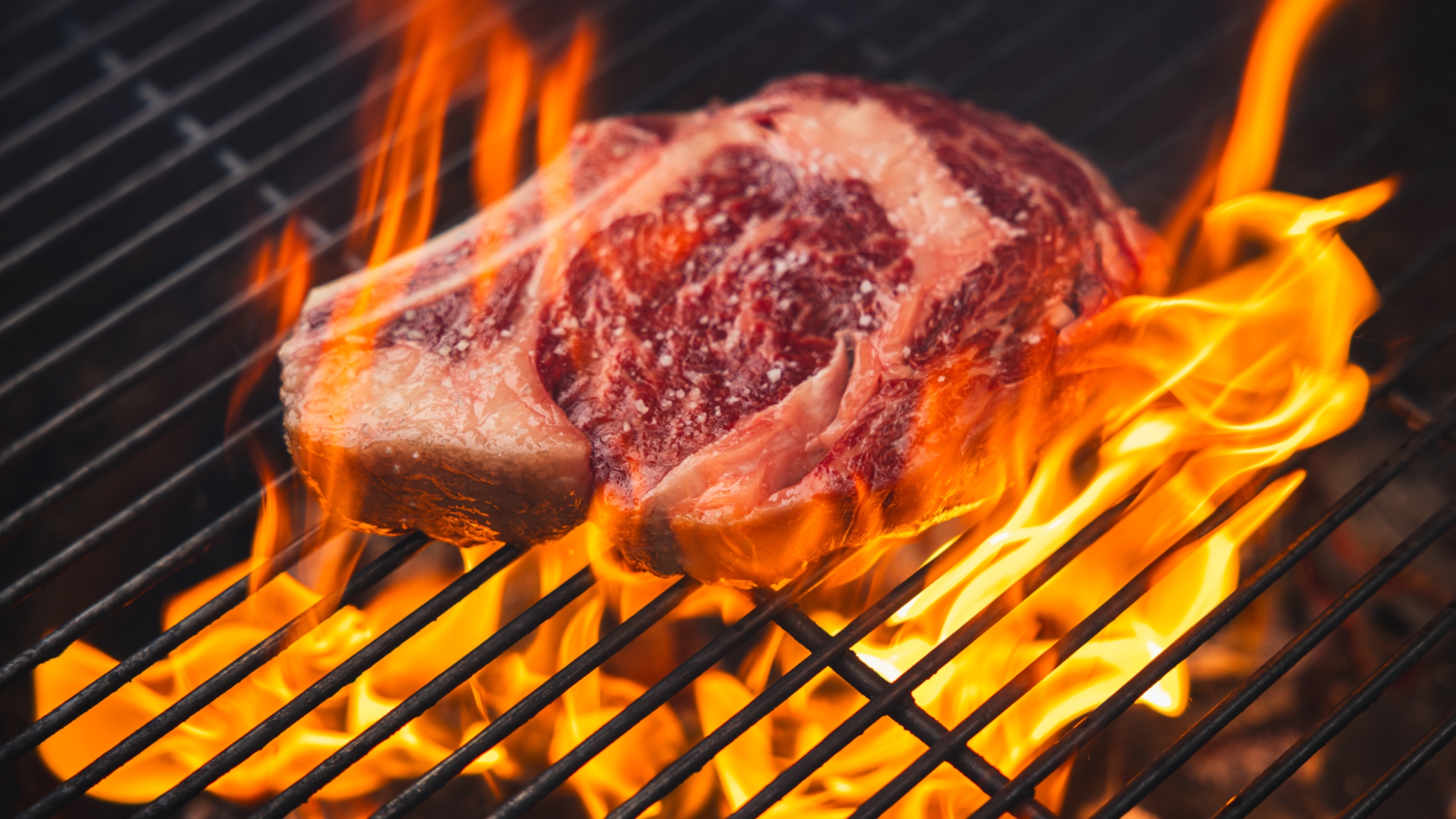
How to Cook the Perfect Ribeye Steak
"I fear not the man who has practiced 10,000 kicks once, but I fear the man who has practiced one kick 10,000 times." — Bruce Lee
The ribeye is the steak lover's steak — richly marbled, deeply flavorful, and more forgiving than any other premium cut, which is exactly why it's the one worth mastering. Learn to cook a ribeye perfectly, and you'll never again wonder what to make when it matters. It's the one cut that rewards a little practice more than any other.
This is the complete method: how to cook a ribeye that's seared and crusty on the outside, juicy and rosy within, with every thread of that marbling doing its job. It's simpler than you think — but the details matter.
The Quick Answer
Salt the steak, bring it to room temperature, and pat it dry. Sear it hard in a screaming-hot cast-iron skillet — or reverse-sear it if it's thick or bone-in — rendering the fat cap along the way. Pull it at medium-rare, then rest it for five to ten minutes before slicing. The ribeye's generous marbling makes it hard to ruin; the two ways people manage it anyway are overcooking it and crowding it with too little heat. Avoid those, and you're most of the way there.
What Makes the Ribeye Special
Understanding the cut is half of cooking it well. The ribeye comes from the rib section of the animal, and it isn't a single muscle — it's a few working together, which is part of what makes it so good.
There's the eye, the large central muscle, tender and evenly marbled. Wrapped around it is the cap — the spinalis — widely considered the single best bite of beef on the entire animal: looser in texture, even more marbled, and impossibly rich. And running through it all is the marbling that defines the cut and gives the ribeye its bold, buttery flavor.
You'll find ribeye sold a few ways: boneless, bone-in (the bone adds flavor and insulates the meat as it cooks), and as a tomahawk — a bone-in ribeye with the long rib bone frenched clean for drama. They all cook on the same principles; the thicker, bone-in versions just want the reverse-sear treatment below. (For where the ribeye sits among all the cuts, see our guide to beef cuts.)
What You'll Need
A cast-iron skillet. Nothing builds a better crust or holds heat more steadily. A heavy stainless pan is a fine second choice.
An instant-read thermometer. Non-negotiable on a cut this good. It's the difference between knowing and hoping.
Coarse salt. If your order came with our mineral sea salt, use it here.
Tongs. For flipping and for standing the steak on its fat edge.
Note what's barely on the list: oil. A well-marbled ribeye — especially a Wagyu one — renders so much of its own fat that you need very little, if any.
Before You Cook
Temper it. Take the steak out of the fridge 30–45 minutes ahead and let it come to room temperature. A cold center cooks unevenly.
Pat it bone dry. Surface moisture is the enemy of a crust. Dry steak, better sear.
Salt it generously. Coarse salt, right before cooking or up to 40 minutes ahead. Ribeye has enough flavor of its own that salt is all it truly needs — though a little cracked pepper never hurt.
A quick word on thickness: aim for a ribeye at least 1 to 1.5 inches thick. Thin ribeyes overcook before they can build a proper crust. Thick ones give you room to get both right.
How to Cook a Ribeye
Two methods, chosen by thickness.
The Cast-Iron Sear (for steaks around 1–1.5 inches)
Heat the cast-iron skillet until it's just beginning to smoke. It needs to be genuinely hot before the steak touches it.
Lay the ribeye down — it should sizzle hard and immediately. As the fat renders, you likely won't need to add oil at all.
Sear about 3 minutes on the first side, without moving it, until a deep brown crust forms.
Flip once and sear the second side another 2–3 minutes.
Render the fat cap. Using the tongs, stand the steak on its fatty edge for 30–60 seconds so that band of fat crisps and renders. This step is what separates a good ribeye from a great one.
Start checking the temperature and pull the steak a few degrees below your target (see below).
The Reverse Sear (for thick, bone-in, or tomahawk ribeyes, 1.5 inches and up)
The best method for a valuable, thick cut — even, edge-to-edge doneness plus a hard crust, with almost no risk of overshooting.
Heat your oven to 250°F. Set the ribeye on a wire rack over a baking sheet.
Cook until the internal temperature reaches about 110–115°F for a medium-rare target — anywhere from 25 to 45 minutes depending on thickness. Use the thermometer.
Heat your cast-iron skillet until it's screaming hot.
Sear the steak 45–60 seconds per side until a deep crust forms, then stand it on its fat edge to render.
Pull, rest, and slice.
Grilling a ribeye? Same principles, one caution: all that rendering fat causes flare-ups. Set up two zones — one hot, one cooler — sear over the hot side, then move the steak away from the flames to finish. Keep an eye on the fire.
The Perfect Ribeye Temperature
A steak keeps cooking after it leaves the heat — carryover adds roughly 5°F as it rests — so always pull it early:
Rare: pull at ~120°F → rests to ~125°F
Medium-rare (the sweet spot): pull at ~125–128°F → rests to ~130–135°F
Medium: pull at ~135°F → rests to ~140°F
Here's a ribeye-specific advantage: because it's so well marbled, the ribeye handles medium better than lean cuts like the filet — that extra fat keeps it juicy where a leaner steak would dry out. Medium-rare is still where most people find its peak, but the ribeye gives you a little more room to land the plane.
Don't Overlook the Cap
When you slice into a ribeye, find the cap — the outer band of meat separated from the eye by a thin line of fat. It's the most marbled, most flavorful bite on the steak, and steak lovers in the know save it for last on purpose. Cook the ribeye right and the cap is your reward.
Rest, Then Slice
Let the ribeye rest 5–10 minutes off the heat before cutting. Resting lets the juices settle back into the meat instead of spilling onto the board. Then slice against the grain — and note that the cap's grain often runs a different direction than the eye's, so you may need to adjust your angle as you go. On a steak this tender, it's a small touch, but it's the finishing one.
Common Ribeye Mistakes
Overcooking it.The one real way to waste a ribeye. Past medium, you're rendering out the marbling you paid for.
Starting cold. A fridge-cold steak cooks unevenly. Temper it first.
Too much oil. The ribeye makes its own fat. A flooded pan steams the crust instead of searing it.
Skipping the fat cap. Unrendered, that band of fat is unpleasant. Take the extra minute to crisp it.
Crowding or under-heating the pan. Not enough heat means no crust. Get it hot, and give the steak room.
Slicing too soon. Cut it right off the heat, and the juices run out. Let it rest.
The Gentry Take
There's a reason the ribeye is worth learning above all others. It isn't about collecting a hundred techniques — it's about mastering one cut so completely that you can put a perfect steak in front of the people you care about, any night you choose, without a second thought. That's not showing off. That's quiet competence, the kind that comes only from doing one thing again and again until it's simply part of you.
Practice one cut ten thousand times, as the man said, and you become someone to reckon with at the stove. Master the ribeye, and you've mastered the steak that matters most.
