
The Complete Guide to Beef Cuts: Every Cut Explained
"It seems disingenuous to the animal not to make the most of the whole beast."— Fergus Henderson
Most people know maybe three cuts of beef by name, order the same one every time, and never find out what they've been missing. That's a shame — because understanding beef cuts is one of the most practical, satisfying pieces of knowledge a person can carry. It changes how you shop, how you cook, and how confidently you can put a great meal in front of people.
This is your field guide. We'll walk the whole animal, cut by cut — where each one comes from, what it's actually like to eat, and the best way to cook it — so that the next time you're choosing beef, you're choosing on knowledge instead of habit.
Start With the Map: The 8 Primal Cuts
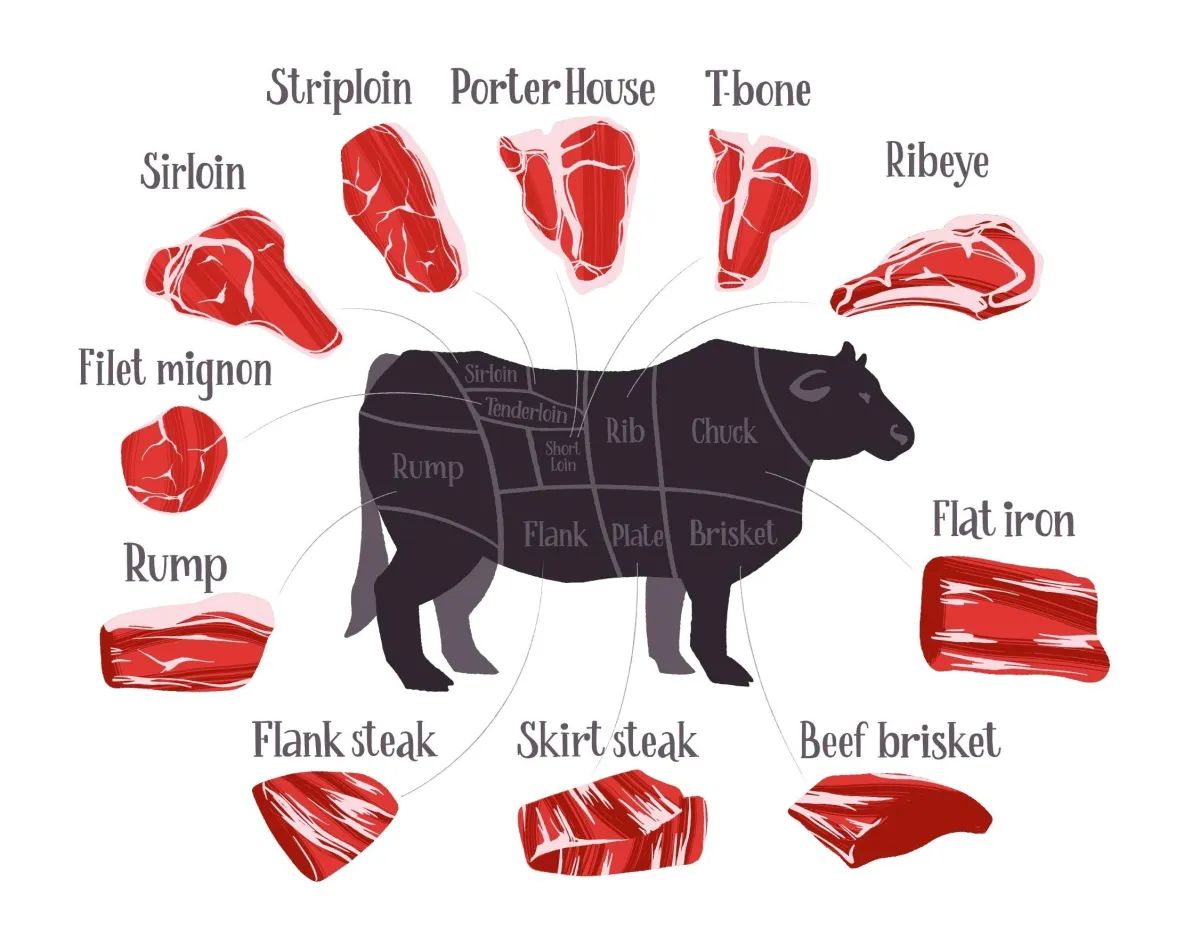
Every steak, roast, and rib on earth comes from one of eight large sections of the animal called primal cuts. Learn these and the rest falls into place, because a cut's primal tells you most of what you need to know about how to cook it.
Chuck (shoulder) — hard-working muscle, rich flavor, great for braising and grinding.
Rib — home of the ribeye. Tender, marbled, indulgent.
Loin — the premium region, split into the short loin(strip, filet, T-bone) and the sirloin.
Round (rear leg) — lean and economical, best roasted or sliced thin.
Brisket (chest) — tough until low-and-slow cooking transforms it.
Plate (belly) — skirt and hanger steaks; loose-textured and full of flavor.
Flank (abdomen) — one lean, beefy, versatile steak.
Shank (leg) — the toughest, most collagen-rich cut; the soul of a great braise.
Here's the simple rule beneath all of it: muscles the animal uses constantly (shoulder, leg) are tougher and reward slow cooking, while muscles it barely uses (the loin, along the spine) are tender and reward fast, high heat. Once that clicks, cooking any cut well becomes obvious.
The Premium Steaks
These are the showpieces — the tender, marbled cuts from the rib and loin that most people picture when they picture a great steak.
Ribeye.The steak lover's steak. Cut from the rib, it's richly marbled, bold, and buttery, with a forgiving nature that makes it hard to ruin. If you want maximum flavor and don't mind the fat that delivers it, this is the one. Cook it hot and fast to a medium-rare.
Ribeye Cap. The crown jewel — the outer muscle that wraps the ribeye (the spinalis), and the single most prized bite on the animal. Intensely marbled, deeply flavorful, and impossibly tender. If you see it offered, treat yourself.
Filet Mignon. Cut from the tenderloin, this is the most tender beef there is — lean, delicate, with a soft, buttery texture rather than a bold beefy punch. Because it's lean, it wants a careful hand: a quick sear, a gentle finish, and never past medium.
New York Strip. The great all-rounder. It strikes the ideal balance between the tenderness of the filet and the beefy flavor of the ribeye, with moderate marbling and a satisfying, firm bite. If you want one steak that does everything well, this is it.
T-Bone & Porterhouse. Two steaks in one, separated by a T-shaped bone: a New York strip on one side, a piece of tenderloin on the other. The Porterhouse is simply the larger version, cut with a more generous filet portion. Impressive on the plate and a genuine two-in-one experience.
Tomahawk. A bone-in ribeye with the long rib bone left in and frenched clean — same glorious cut, maximum drama. As much a centerpiece as a meal.
These premium cuts are exactly where American Wagyu marbling shows off most, and where a little care at the stove pays off most. (When you're ready to cook one, our guide to cooking Wagyu steak covers the technique.)
The Everyday & Value Steaks
Some of the best beef on the animal isn't the most expensive. These cuts eat far above their price when you treat them right.
Top Sirloin. Leaner than the premium steaks but genuinely beefy and endlessly versatile — a workhorse for weeknight dinners that doesn't ask much of your wallet. Grill or pan-sear, and don't overcook it.
Tri-Tip. A triangular cut from the sirloin, flavorful and lean, beloved on the grill. Roast it whole or grill it over two zones, then slice thin against the grain.
Flat Iron. The quiet overachiever. Cut from the shoulder, it's one of the most tender cuts on the entire animal — second only to the tenderloin — yet it stays affordable and well-marbled. One of the best values in all of beef.
Flank Steak. Lean, long-grained, and intensely beefy. It rewards a marinade, a hot fire, and — this part matters — slicing thin against the grain, which is the difference between tender and chewy.
Skirt Steak. The flavor champion. Loose-textured and thin, it's the classic choice for fajitas and carne asada. Cook it fast over high heat and slice against the grain.
Hanger Steak. The "butcher's steak," so named because butchers used to keep it for themselves — there's only one per animal, and it's superbly flavorful and tender when cooked to medium-rare. A connoisseur's everyday cut.
The Low-and-Slow Cuts
These come from the hard-working parts of the animal. They're tough if you rush them and sublime if you don't — full of collagen that melts, over hours of gentle heat, into rich, tender, deeply flavored meat.
Brisket.The BBQ king. Tough and collagen-rich straight off the animal, it becomes something transcendent after long, slow smoking or braising. Patience is the only ingredient that matters.
Chuck Roast.The Sunday pot roast. Well-marbled and richly flavored, it braises down into fork-tender, shreddable comfort food — and its trim also makes some of the best ground beef and burgers you'll eat.
Short Ribs.Meaty, fatty, and generous, braised or smoked until the meat surrenders from the bone. Few things reward slow cooking more.
Shank.The toughest cut, and the secret behind the best braises and broths. Cooked low and slow — as in a classic osso buco — it delivers unmatched depth and body.
The Workhorse: Ground Beef
Don't overlook it. Ground beef is the most-used beef in most kitchens, and its quality matters just as much as a ribeye's — a great burger or Bolognese starts with great grind. It's also the single largest portion of any whole beef share, which is part of what makes buying in bulk so practical.
How to Choose the Right Cut
A quick cheat sheet for the next time you're deciding:
Want the most tender bite? Filet mignon.
Want the most flavor and marbling? Ribeye — or the ribeye cap, if you can get it.
Want one steak that does everything? New York strip.
Want the best value that eats like a premium cut? Flat iron or top sirloin.
Cooking fast on a weeknight?Skirt, hanger, or flank — hot heat, thin slices, against the grain.
Feeding a crowd, low and slow? Brisket, chuck roast, or short ribs.
Why Knowing Your Cuts Pays Off
Here's the practical reward for all of this: when you understand the whole animal, you stop overpaying for a handful of famous cuts and start appreciating the range. You discover that a flat iron can rival a filet, that a well-braised chuck roast can outshine a rushed ribeye, and that a beef share— a quarter, half, or whole — gives you the entire spectrum to cook your way through.
At Dizzy Creek, every cut comes from the same American Wagyu raised on our private Nebraska ranch, so the quality holds from the ribeye all the way down to the ground. Knowing what to do with each one is how you get the most out of it — and the most out of the animal.
The Gentry Take
There's a quiet competence in being able to talk about beef with actual knowledge — to know why a ribeye and a filet are different animals on the plate, to choose the right cut for the moment instead of defaulting to the one you always order. It's a small thing. But small competencies, stacked up, are what separate a person who drifts through life from one who moves through it with intention.
Learn your cuts. Cook them well. Make the most of the whole beast, and the people at your table will taste the difference — even if they never know exactly why.
