Is Buying a Quarter, Half, or Whole Cow Worth It?
"To be prepared is half the victory."— Miguel de Cervantes
At some point, most people who care about what they eat run into the same idea: instead of buying beef one package at a time, buy it the way it used to be bought — in bulk, direct from the ranch, a whole share at once. A quarter. A half. A whole.
And then the questions start. How much beef is that, really? Will it fit in my freezer? Is it actually cheaper, or does it just feel impressive? What if I get stuck with a hundred pounds of cuts I don't know how to cook?
Those are the right questions to ask, and they deserve honest answers rather than a hard sell. So here is the straight version of how beef shares work, what they cost, and how to know whether one is right for your household.
What You Actually Get: Quarter vs. Half vs. Whole
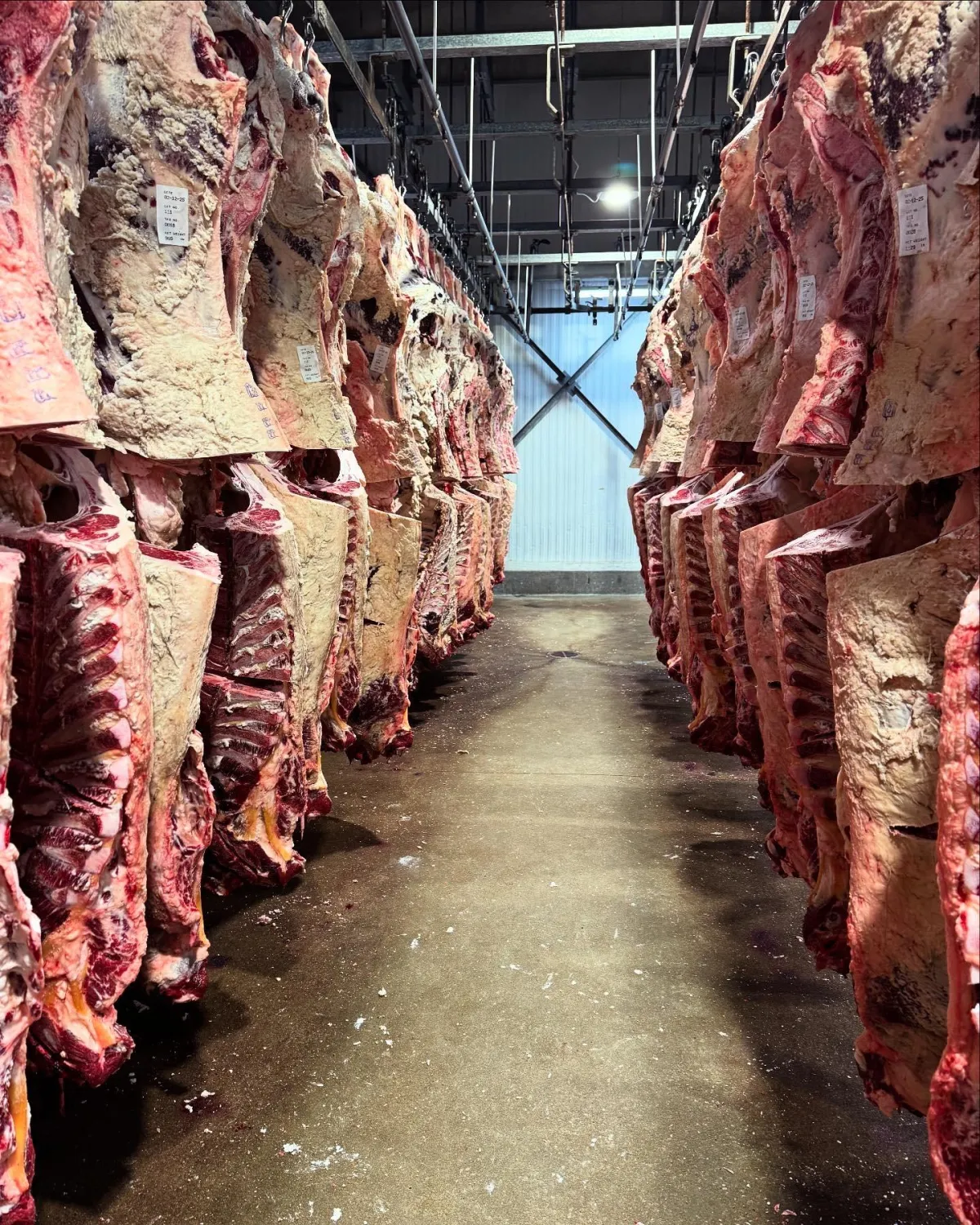
First, a small but important truth: a "quarter cow" does not mean you receive one-fourth of a living animal's weight in steaks. After the parts that don't end up on your plate are removed, your take-home weight is a portion of that. Exact numbers vary by the size of the animal and how you have it cut, but as a working guide:
Quarter share: roughly 100–130 lbs of finished, packaged beef. Enough to stock a freezer for a couple or a small family for several months.
Half share: roughly 200–250 lbs. The sweet spot for a family that eats beef regularly, or two households splitting an order.
Whole share: roughly 400–500 lbs. For large families, serious entertainers, or a few friends going in together.
If those numbers sound like a lot, that's because they are — and that's the point. A share isn't a grocery run. It's a season's worth of good beef secured in a single decision.
What Cuts Come in a Beef Share?
A share is the whole animal's worth of variety, not a freezer full of one thing. A typical mix includes:
Steaks: ribeye, New York strip, sirloin, filet, flank, and more — the cuts you'd pay a premium for individually.
Roasts: chuck and round roasts, built for slow Sundays and feeding a crowd.
Ground beef: usually the single largest portion of any share, often 30–40% of the total. The everyday workhorse.
The extras: brisket, short ribs, stew meat, and the cuts a good butcher knows how to make worth your while.
If you've ever read an old guide to buying beef direct, you may have run into the "split quarter versus mixed quarter" decision — front-quarter cuts lean toward chuck and ground beef, while hind-quarter cuts carry more of the premium steaks. Traditionally you had to choose, and live with the imbalance.
It's worth knowing that distinction exists. But with a curated share like ours, you don't have to navigate it. Our shares are balanced and pre-portioned for you, so you get a sensible spread of steaks, roasts, and ground without filling out a cut sheet or second-guessing the butcher.
The Real Cost: Is a Beef Share Cheaper?
Here is where we'll be more honest than most.
For commodity beef, the classic pitch is that a quarter cow beats grocery-store prices per pound. That can be true. But we raise American Wagyu, and we're not going to insult you by pretending a premium share is the budget option. It isn't.
What a share genuinely saves you is something more honest and, for the right person, more valuable. When you buy a share, you're acquiring premium steaks, roasts, and ground at a meaningfully better blended cost than buying those same cuts individually — because you're taking the whole animal's worth at once rather than cherry-picking ribeyes at retail, where premium cuts carry the steepest markup. You're also locking in today's quality and price instead of riding the grocery store's swings month to month.
And then there's the part that doesn't show up on a receipt: you stop thinking about it. Your freezer is stocked with beef you trust, you skip the weekly debate at the meat counter, and you always have something excellent on hand when people show up. For the household that values its time and its standards, that convenience isn't a bonus. It's most of the point.
So the honest answer to "is it cheaper?" is: it's better value, not bargain pricing. If you were going to buy quality beef anyway, a share is the smarter way to do it. If you're hunting for the lowest price per pound, this was never the right aisle.
Freezer Space: The Question Everyone Forgets
This is the practical detail that trips up first-time buyers, so plan for it before you order.
A good rule of thumb is roughly one cubic foot of freezer space for every 25–30 lbs of beef. That means a quarter share needs around 3.5–4 cubic feet — about a third of a standard upright freezer, or a small dedicated chest freezer. A half or whole share calls for real freezer capacity of its own.
A few things worth knowing:
A small chest freezer (5–7 cubic feet) is an inexpensive, one-time purchase and pays for itself quickly if you buy shares regularly.
Vacuum-sealed beef kept frozen at or below 0°F holds its quality for roughly 12–18 months, so there's no rush to eat it all at once.
If the power goes out, a full freezer kept closed will stay frozen far longer than a half-empty one — usually a day or more — so a stocked freezer is actually more resilient, not less.
Which Share Is Right for You?
A simple way to decide:
Start with a quarter if you're a couple, a smaller household, or buying direct for the first time. It's the most comfortable entry point — enough variety to matter, without overwhelming your freezer.
Go with a half if your family eats beef most weeks and you'd rather not reorder for a long while. This is the size most regular customers settle into.
Choose a whole if you have a large household, entertain often, or you're splitting the order with family or friends. It's the best per-pound value and the longest runway between orders.
And if you're not ready to commit to a full share, that's exactly what our curated bundlesare for — a smaller, hand-picked selection that lets you taste the difference before you stock the freezer.
The Dizzy Creek Difference
Buying beef direct used to mean coordinating with a rancher, filling out a cut sheet you didn't fully understand, driving to a processor, and hauling home a pile of paper-wrapped packages. The beef was worth it, but the process asked a lot of you.
We kept everything good about that tradition and removed the friction. Our American Wagyu is raised on our private Nebraska ranch by Shane Lechtenberg and his family, finished with a mineral-rich sea salt diet, and processed to USDA standards by partners who hold the line on quality. Your share arrives curated, pre-portioned, vacuum-sealed, and shipped frozen straight to your door. No cut sheet. No processor run. No guesswork.
It's the old way of buying beef — knowing your rancher, knowing your source, stocking your home with the real thing — delivered the way your life actually works now. If you want to understand exactly what makes the beef itself worth it, start with our guide to what American Wagyu really is.
The Gentry Take
There's something quietly old-fashioned, in the best sense, about provisioning your home. Stocking the freezer isn't glamorous. It doesn't ask for applause. But it's one of the simplest expressions of a value worth keeping alive: looking ahead, taking care of the people who count on you, and making sure that when the moment comes — a quiet dinner, an unplanned guest, a cookout you decide to throw on a whim— you're ready.
A man who plans ahead carries a certain steadiness. He isn't scrambling. He isn't settling for whatever's left on the shelf. He's already decided what he'll serve and where it came from, long before anyone sits down.
That's what a beef share really is. Not just a freezer full of good meat — a small act of foresight, on behalf of the people at your table.
