
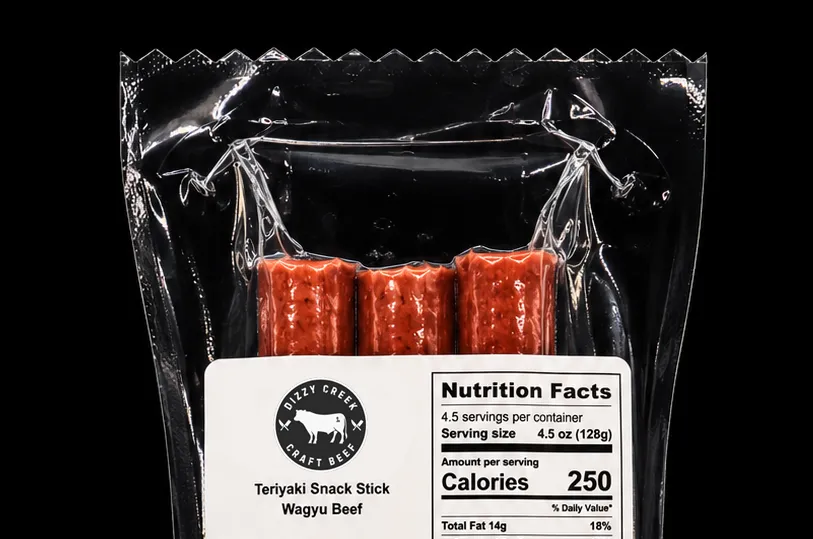
Are Wagyu Beef Sticks Worth It? An Honest Look
"It's the little things that are most important. Little things make big things happen."— John Wooden
The high-protein snack aisle is a minefield. Half of it is candy wearing a lab coat — bars packed with sugar and a protein number slapped on the front — and the other half tastes like flavored cardboard. So it's no surprise that beef sticks have quietly become the snack serious people reach for. And lately, a premium version has shown up: the Wagyu beef stick.
Which raises a fair question. Is a Wagyu beef stick actually worth it, or is "Wagyu" just a fancier word on the wrapper? Here's the honest answer.
The Quick Answer
A quality Wagyu beef stick is one of the best portable, high-protein, low-carb snacks you can keep on hand — richer and more flavorful than an ordinary beef stick, with a cleaner nutritional profile than most packaged snacks. But there's a catch: the word "Wagyu" on a wrapper guarantees nothing. What actually makes a beef stick good or junk is the ingredient list, and that's where most of them fall apart. Choose well and they're genuinely worth it. Choose blindly, and you're just paying more for the same processed snack.
What Makes a Wagyu Beef Stick Different
The difference starts with the beef. American Wagyu is prized for its marbling — the fine intramuscular fat that gives it a rich, buttery flavor and a fat profile that skews toward the more favorable monounsaturated fats. In a beef stick, that translates to something noticeably more satisfying: deeper flavor, a better texture, and a snack that eats like real food rather than a rubbery afterthought.
Ordinary beef sticks are often made from the cheapest trim available and rely on heavy processing, sugar, and artificial flavor to make up for it. A Wagyu stick starts from better raw material — which means it needs far less help to taste good.
Are Beef Sticks Actually Healthy?
This deserves a straight answer rather than a slogan.
A well-made beef stick has real going for it: it's high in protein, low in or free of carbs and sugar, shelf-stable, and portable — no refrigeration, no prep, no mess. For anyone trying to eat more protein and less processed sugar, it's a legitimately smart choice, and a far better one than most "healthy" snacks.
But honesty requires the other half of the picture. Beef sticks are a processed food, even the good ones, and they tend to be relatively high in sodium — worth keeping in mind if that's something you watch. And the cheap ones hide a lot of sins: added sugars, fillers and binders, artificial preservatives, and low-grade meat you can't trace. So "are beef sticks healthy?" has no universal answer. A clean, well-sourced one is a genuinely good snack. A junk one is junk with a protein claim on the front. The quality is everything.
How to Tell a Good Beef Stick From Junk
The wrapper won't tell you. The ingredient list will. Here's what to look for:
A short list of real ingredients. Beef, salt, spices, a natural casing. If you can't pronounce half of it, put it back.
Beef you can trace. Quality, single-source beef beats anonymous commodity trim every time — the same principle that separates real food from processed filler. (It's exactly why we raise and source everything ourselves.)
No added sugar. A surprising number of beef sticks and most jerky are quietly sweetened. You don't need dessert in your protein snack.
No fillers or mystery binders. Soy, corn syrup solids, and "mechanically separated" anything are signs you're paying for padding.
Real spices, not "natural flavor." Good flavor comes from good beef and actual seasoning, not a lab.
Run any beef stick through that checklist, and you'll instantly see why they're not all created equal — and why a premium one is often the cleaner choice, not just the tastier one.
Beef Sticks vs. Jerky vs. Protein Bars
A quick comparison, since these are the usual alternatives:
Beef sticks vs. jerky: Jerky is leaner and chewier, but it's also frequently loaded with sugar and marinades to keep it palatable. A good beef stick is richer, more satisfying, and often has the cleaner label of the two.
Beef sticks vs. protein bars: Most protein bars are highly engineered, sugar-heavy, and long on ingredients. A quality beef stick is closer to whole food — real beef, real spices, and a protein hit without the sugar crash.
Who Wagyu Beef Sticks Are For
They earn their place for anyone whose day doesn't leave room for a proper meal. The busy professional who needs real fuel between meetings instead of a vending-machine collapse. The traveler who wants protein that survives a carry-on. The post-workout refuel, the low-carb lifestyle, the glovebox, the desk drawer, the hiking pack, even the lunchbox. Anywhere you'd otherwise reach for something worse, a good beef stick is the upgrade.
So, Are They Worth It?
If you're comparing a Wagyu beef stick to the cheapest option at a gas station, then no — nothing beats cheap on price alone. But that was never the right comparison. Measured on what actually matters — flavor, clean ingredients, quality beef, and a snack that genuinely satisfies instead of just filling a gap — a well-made Wagyu beef stick is absolutely worth it. You're not paying for a word on a wrapper. You're paying for the difference between real food and processed filler, in the one category where most people never think to demand it.
Our Wagyu beef sticks are made from the same American Wagyu we raise on our Nebraska ranch — real beef, real ingredients, nothing to hide on the label. Which is exactly how a snack should be.
The Gentry Take
It's easy to hold a high standard for the big things — the steak dinner, the special occasion — and quietly let it slide everywhere else. But character tends to show up in the small choices, the ones nobody's watching. What you reach for at three in the afternoon when you're tired and no one would know the difference says as much as what you serve at the head of the table.
Refusing to settle for junk, even in something as small as a snack, isn't fussiness. It's just the same standard, applied all the way down. The little things, as the man said, are where the big things are actually decided.
