Why Buy Beef Direct From a Ranch? What "Local" Really Means
"Conservation is a state of harmony between men and land."— Aldo Leopold
Here's a question most people can't answer about the beef they ate this week: where did it come from?
Not the grocery store. The animal. What ranch raised it, what it was fed, whose hands raised it, what kind of life it had. For the vast majority of beef sold in America, there is no answer — not because anyone is hiding it, but because the system genuinely isn't built to know.
Buying beef direct from a ranch is the opposite of that. It's choosing to know. And once you understand how the rest of the beef world actually works, it's hard to go back.
What "Buying Beef Direct" Actually Means
Buying direct means purchasing your beef straight from the ranch that raised the animal, rather than from the long, anonymous chain that stands between a grocery shelf and a pasture. No distributor. No national brand. No mystery. One ranch, one source, delivered to you.
It's the way beef was bought for most of human history — you knew the person who raised your food — modernized so it fits the way you actually live now. Same trust. Same traceability. Just shipped to your door instead of bartered over a fence.
How Most Beef Actually Reaches Your Plate
To understand why direct matters, it helps to see what it's replacing.
The beef in a typical grocery package is a product of scale. Cattle are gathered from many different ranches and feedlots, processed at enormous facilities, and combined. A single package of commodity ground beef can contain meat from a large number of animals from a large number of sources. It's efficient, it's affordable, and it has fed a lot of people — but it comes at the cost of knowing anything specific about what you're eating.
That's not a scandal. It's just a trade-off, and most people make it without ever being asked. The animal becomes anonymous. The ranch becomes irrelevant. The label tells you almost nothing that matters: not how the animal was raised, not what it was fed, not who stood behind it. You're trusting a system, not a person.
Buying direct flips that. You're trusting a person again — one who can answer every question, because they were there for all of it.
What "Local" Really Means (and What It Doesn't)
"Local" has become one of the most comforting words in food, and one of the loosest. It's worth being honest about it.
Local is often used to mean "raised somewhere near you." But proximity, on its own, guarantees nothing. A nearby operation can still be anonymous, mass-handled, and indifferent to quality. Meanwhile, a family ranch several states away can give you complete transparency, a real relationship, and beef raised with obvious care.
So the part of "local" that actually matters isn't the mileage. It's the connection and the traceability— knowing the specific ranch, the specific family, and the specific way the animal was raised. That's the thing worth seeking out. Direct-to-your-door ranching is what makes it possible to have that connection with a ranch, whether it's down the road or across the country.
Put simply: don't just ask whether your beef is local. Ask whether anyone can actually tell you its story. That's the real test.
Why People Choose to Buy Direct
The reasons tend to come down to a handful of things that are hard to get any other way:
Traceability. You know the ranch, the family, and how the animal was raised — down to its diet and its land.
Quality and freshness.Fewer hands, fewer steps, less time and distance between pasture and plate.
Knowing how it was raised. Diet, care, and standards aren't a guess or a marketing claim — they're an answer you can get from the people who did it.
Supporting families, not faceless supply chains. Your money goes to the people doing the actual work of raising good beef on good land.
Taste. Beef raised with intention, by people whose name is on it, simply eats better. The care shows up on the plate.
What Supporting a Local Rancher Actually Does
This is the part that reaches past your own table.
Family ranching is a hard way to make a living, and it has been getting harder for a long time. Independent ranchers are squeezed by consolidation, by thin margins, and by a market that rewards scale over stewardship. Every year, more good families decide it isn't worth it, and more land changes hands.
When you buy direct, you're casting a small, concrete vote against that. You're sending your dollars to the people who still raise cattle the careful way, who still know their animals and tend their land, and who are betting their livelihood on doing it right. You're helping keep family ranching — and the working land that depends on it — alive for the next generation. It's a quiet form of conservation, and a quiet form of respect.
Pasture to Plate at Dizzy Creek
This is exactly the standard we built the ranch to meet, and it's why we can answer every question the commodity system can't.
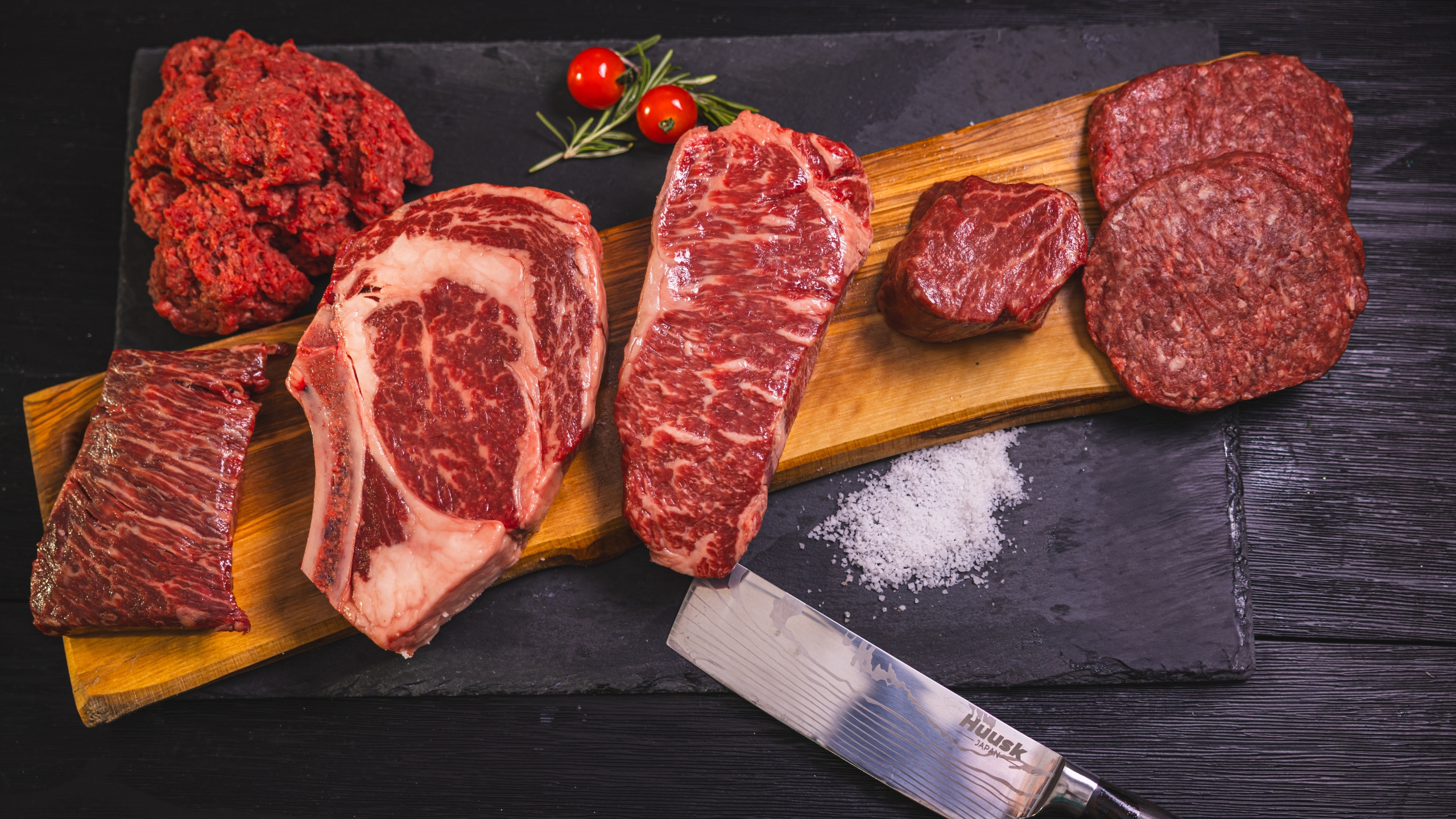
Dizzy Creek Craft Beef is American Wagyu raised on our private Nebraska ranch by Shane Lechtenberg and his family — people who treat cattle as a craft and the land as a responsibility. Our cattle are finished on a mineral-rich sea salt diet that supports their health and deepens the flavor of every cut. The beef is processed to USDA standards by our trusted partners at Lot 279, then curated, packed with intention, and shipped frozen straight to your door.
Every step has a name and a place attached to it. There's no point in the journey we can't tell you about, because there's no point we weren't part of. That's what pasture to plate is supposed to mean — not a slogan, but an unbroken line you can actually trace.
If you're ready to buy beef this way, the simplest place to start is a quarter, half, or whole share— or a smaller curated bundle to taste the difference first.
The Gentry Take
There's an old idea worth holding onto: that a person should know where the things in their life come from, and should feel some responsibility toward them. Where the food on the table was grown. Whose work made it possible. What it cost the land and the animal and the people who raised it.
That kind of awareness isn't sentimentality. It's the foundation of honoring the meal— respecting the rancher, the animal, the land, and the people gathered around your table. It's one of the most grounded, least showy ways a person can demonstrate their values: not by talking about them, but by paying attention to the ordinary choices most people make on autopilot.
Choosing to know where your beef comes from is a small decision. But small decisions, made with care and repeated over a lifetime, are what character is actually made of.
That's the kind of standard worth gathering around — and the kind worth passing on.
