
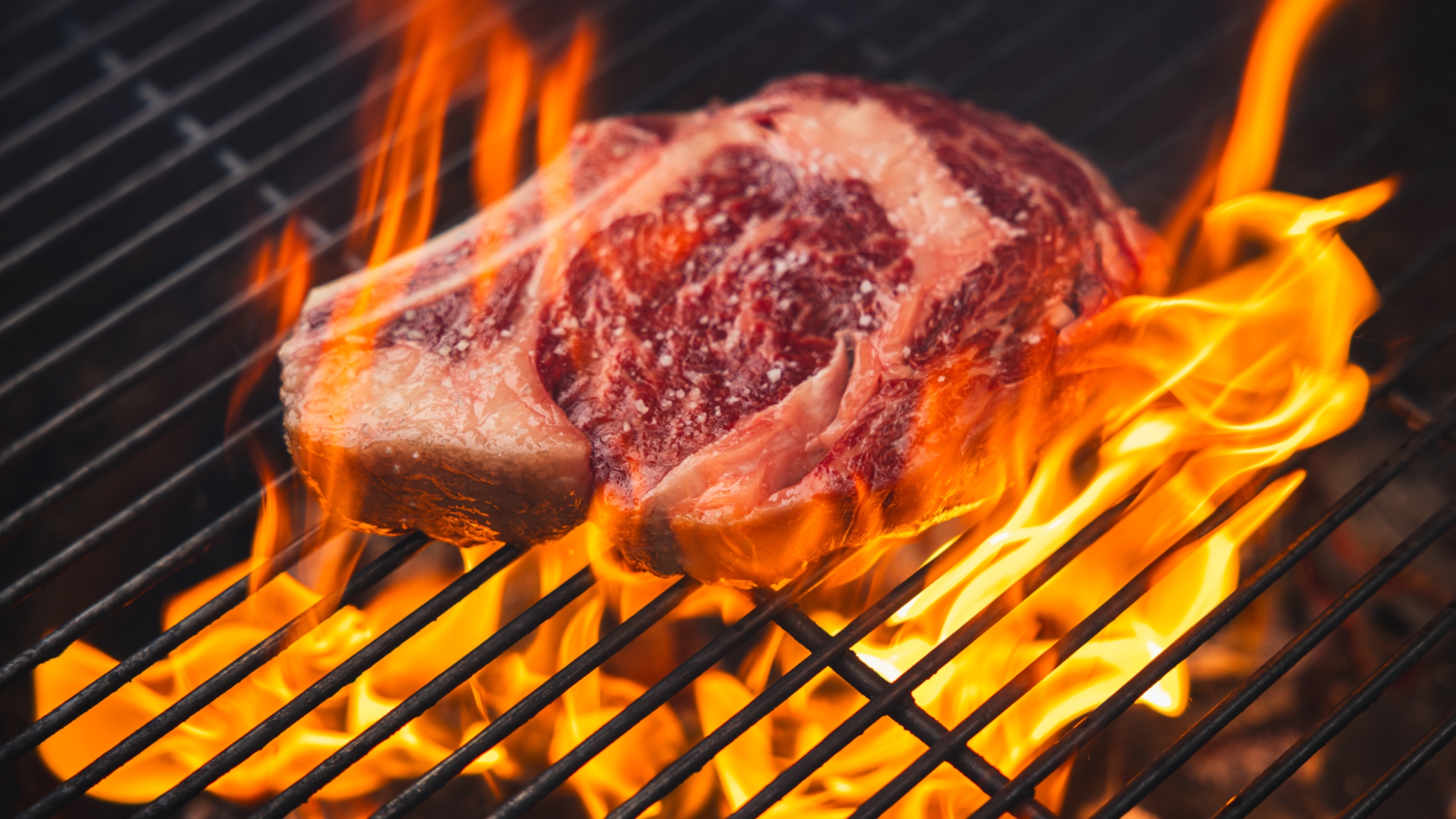
How to Cook Wagyu Steak Without Ruining It
"Perfection is achieved not when there is nothing more to add, but when there is nothing left to take away."— Antoine de Saint-Exupéry
You did the hard part already. You sourced beef raised the right way, by people who put their name on it. Now there's exactly one thing standing between you and one of the best steaks of your life: the ten minutes it spends over heat.
Here's the good news. Cooking American Wagyu isn't complicated. It's actually less fussy than most cooking, because great beef doesn't want to be dressed up — it wants to be left alone and treated with a little respect. The bad news is that the most common instinct, the one that serves you well with cheaper cuts, is the exact thing that ruins Wagyu.
So let's make sure that doesn't happen. This is everything you need to cook Wagyu steak with confidence.
The One Rule That Matters Most: Don't Overcook It
If you remember nothing else, remember this. The entire reason American Wagyu is special is the marbling — the fine threads of fat woven through the muscle. When you cook it gently to rare or medium-rare, that fat softens and spreads through every bite, and you get the buttery, melt-in-your-mouth result you paid for.
Push it past medium, and you cook that fat right out of the steak. You render away the very thing that made it worth buying and end up with an expensive piece of well-done beef. It's the single most common way good Wagyu gets wasted.
Cook Wagyu to rare or medium-rare. Never past medium. That's the whole philosophy. Everything below is just how to do it well.
What You'll Need
A cast-iron skillet(or a heavy stainless pan). It holds heat and builds the best crust. A grill works too — more on that below.
An instant-read meat thermometer. This is not optional. It's the difference between guessing and knowing, and it's the cheapest insurance you'll ever buy for a steak this good.
Coarse salt. If your order came with our mineral sea salt, this is its moment — the same salt that fed the cattle, finishing the beef it produced.
Tongs and a little patience. That's genuinely it.
Notice what's not on the list: a bottle of oil. Wagyu renders so much of its own fat that you need little or none. More on that in a moment.
Before You Cook: Three Things
Take the steak out early. Let it sit at room temperature for 30–45 minutes before cooking. A cold-from-the-fridge steak cooks unevenly — scorched outside, cold center.
Pat it bone dry. Surface moisture steams instead of sears. A dry surface is how you get a real crust.
Salt it. Season generously with coarse salt — either right before cooking, or up to 40 minutes ahead for an even better crust. Add cracked pepper if you like. That's the entire seasoning. Trust the beef.
How to Cook Wagyu Steak
There are two reliable methods. Which one you use depends on how thick your steak is.
For Thick Cuts (1.5" or more): The Reverse Sear
This is the most forgiving method and the best one for a valuable cut. You cook it slowly first, then sear it hard at the end — which gives you edge-to-edge even doneness and a beautiful crust, with very little risk of overshooting.
Heat your oven to 250°F. Set the steak on a wire rack over a baking sheet.
Cook until the internal temperature reaches about 110–115°F for a medium-rare target — roughly 20–40 minutes depending on thickness. Use the thermometer; don't guess.
While it finishes, heat your cast-iron skillet until it's just beginning to smoke. Screaming hot.
Sear the steak 45–60 seconds per side, pressing for full contact, until a deep brown crust forms.
Stand it on its fat edge with the tongs for another 30–60 seconds to render and crisp that fat.
Pull it, rest it, slice it. (Resting details below.)
For Thinner Cuts (under 1.5"): The Hot Sear
Heat the cast-iron skillet until just smoking. You want it ripping hot before the steak touches it.
Lay the steak down — it should sizzle hard and immediately. As the fat renders, you likely won't need to add any oil at all.
Sear about 2–3 minutes on the first side without moving it, until a crust forms.
Flip once. Sear the second side another 2 minutes.
Stand it on its fat edge for 30–60 seconds to render the fat cap.
Start checking the temperature, and pull it the moment it's a few degrees below your target.
An optional steakhouse finish: in the last minute, drop a small knob of butter, a clove of crushed garlic, and a sprig of thyme into the pan, tilt it, and spoon the foaming butter over the steak. With Wagyu it's gilding the lily — but it's a beautiful way to gild it.
Temperature Guide (Pull Temps)
A steak keeps cooking after it leaves the heat — carryover will raise the internal temperature by roughly 5°F as it rests. So always pull it before it hits your target:
Rare:pull at ~120°F → rests to ~125°F
Medium-rare (recommended):pull at ~125–128°F → rests to ~130–135°F
Medium (the furthest we'd go): pull at ~135°F → rests to ~140°F
For Wagyu, medium-rare is the sweet spot — warm and red-pink through the center, with the fat fully softened. We'd gently talk you out of anything past medium.
Rest It, Then Slice It
When the steak comes off the heat, leave it alone for 5–10 minutes before cutting. Resting lets the juices redistribute through the meat instead of running out onto the board the second you slice. It's the easiest step to skip and one of the most important.
Then slice against the grain— across the direction the muscle fibers run, not with them. This shortens those fibers and makes every bite more tender. On an already-tender Wagyu cut, it's the finishing touch.
The Mistakes That Ruin Wagyu
Avoid these five, and you'll be fine every time:
Overcooking.The cardinal sin. You're melting away the marbling.
Drowning it in oil. Wagyu makes its own fat. A flooded pan steams the crust and masks the flavor.
Over-seasoning or saucing.Salt and heat. Let the beef be the beef.
Cooking it cold. Straight from the fridge means an uneven cook. Temper it first.
Skipping the thermometer or the rest.Guessing the temp and slicing too soon undo all your good work in the last thirty seconds.
A Note on Grilling
You can absolutely grill Wagyu, but the same rendering fat that makes it delicious will also cause flare-ups. Set up two zones — one hot side, one cooler side. Sear over the hot side, then move the steak to the cooler side to finish, away from the flames, checking the temperature as you go. Same rules, same target. Just keep an eye on the fire.
And the Rest of Your Share
Steaks get the spotlight, but a beef share gives you roasts, ground, and slow-cooking cuts too — and those reward a different kind of attention: low heat, time, and patience. Every cut has its method, and learning them is half the pleasure. Master the steak first; the rest follows naturally. As we say in our guide to hosting, you don't need a complicated menu — you need one great cut, cooked with confidence.
The Gentry Take
There's a quiet kind of competence in knowing how to cook one thing exceptionally well. Not a hundred dishes — one. The man who can put a perfect steak in front of the people he cares about isn't showing off. He's demonstrating something steadier: that he pays attention, that he respects what's in his hands, and that he's willing to do the small things right.
That's the whole spirit of it. We do the slow work of raising the beef. We give the salt. You bring the sear. The rest is just a hot pan, a little patience, and the satisfaction of doing it well.
