
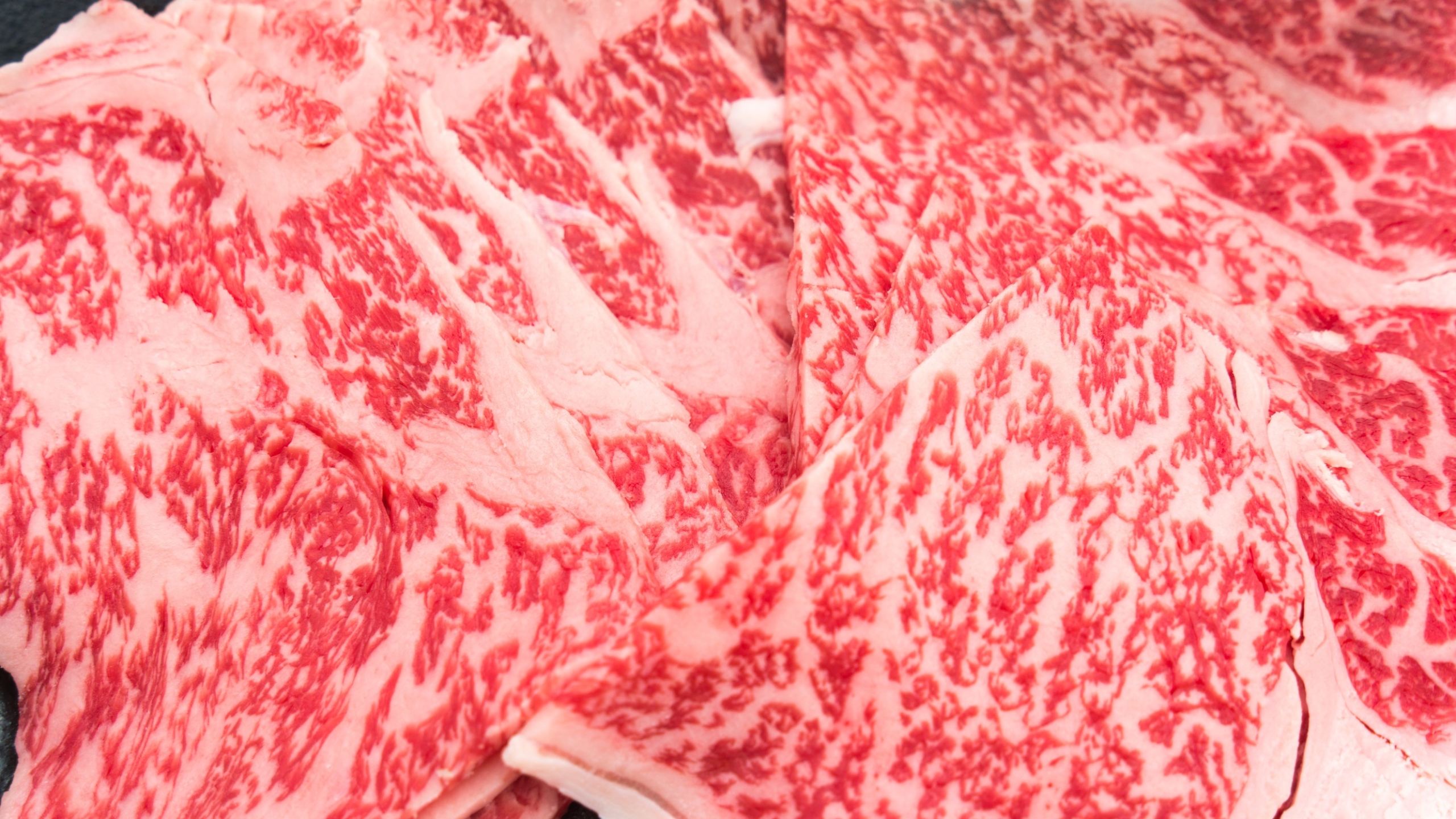
Is Wagyu Beef Healthy? What the Marbling Really Means
"One cannot think well, love well, sleep well, if one has not dined well."— Virginia Woolf
It seems like a contradiction. Wagyu is the most marbled beef in the world — its whole reputation is built on fat. So how could anyone call it healthy?
It's a fair question, and the honest answer is more interesting than a simple yes or no. Because when it comes to Wagyu, the conversation isn't really about how much fat. It's about what kind. And that distinction changes the whole picture.
Here's the straight version, with the caveats most beef marketing conveniently leaves out.
The Honest Quick Answer
Wagyu is not a "health food," and we won't pretend it is — it's rich, calorie-dense, and meant to be enjoyed with intention. But the fat that makes it special is a different, arguably better-quality fat than what you find in ordinary beef. Eaten in sensible portions as part of a balanced diet, high-quality Wagyu can absolutely fit into healthy eating. The marbling isn't the problem. The marbling is the point — and the type of fat is what matters.
It's About the Kind of Fat, Not Just the Amount
Here's the part that surprises people. Wagyu's fat skews toward monounsaturated fats— the same family of fats that dominate olive oil, often considered among the more heart-friendly fats in the diet. Compared to typical beef, Wagyu tends to carry a higher proportion of these unsaturated fats relative to saturated fat.
There's a simple, visible clue to this: Wagyu fat has a notably low melting point. It begins to soften at temperatures close to the warmth of your hand, which is exactly why a good Wagyu cut seems to melt the moment it meets heat or your palate. That low melting point is a direct result of its higher unsaturated-fat content.
Even within its saturated fat, a meaningful share is stearic acid, which research suggests behaves more neutrally than some of the other saturated fats people are advised to limit. None of this turns a steak into a supplement — but it does mean that gram for gram, the fat in Wagyu is a different animal, literally and nutritionally, than the fat in commodity beef.
What Wagyu Is Not
Now the honest counterweight, because credibility cuts both ways.
Wagyu is still a fatty, calorie-dense food. A more favorable fat profile does not make it low-fat, low-calorie, or something to eat without limit. The very marbling that gives it that better fat ratio also means there's simply more fat in every bite than you'd get from a lean cut. "Better fat" is not the same as "unlimited fat."
So the sensible way to think about Wagyu is as a high-quality indulgence — a food worth savoring in reasonable portions, not one to eat by the pound because you read it has nice fatty acids. Quality over quantity is the entire spirit of it.
Wagyu vs. Grass-Fed Beef
This is the other comparison health-minded buyers ask about, and it deserves an honest answer rather than a winner.
Grass-fed beef is typically leaner, and tends to carry more omega-3 fatty acids and conjugated linoleic acid (CLA) than grain-finished beef — but usually with less marbling and a leaner, firmer bite. And here's where it gets interesting: most Wagyu is grain-finished in a feedlot, because that's the easy way to build marbling. But it doesn't have to be. Grass-finished Wagyu — cattle raised and finished entirely on pasture — is rare and much harder to produce, and it's genuinely the best of both worlds: the marbling and rich flavor of Wagyu genetics plus the leaner fat profile and omega-3 benefits that come from finishing on grass.
So it's not a simple case of grass-fed being "healthy" and Wagyu being "indulgent." With conventional grain-finished beef there's a real trade-off — leanness and omega-3s on one side, marbling and richness on the other. But grass-finished Wagyu is exactly the combination that narrows that gap: you don't have to choose between the eating experience and the cleaner profile. That's the rare version worth seeking out.
Why How It's Raised Matters as Much as the Cut
There's a part of "is it healthy?" that has nothing to do with fatty-acid charts: knowing what actually went into the animal.
With commodity beef blended from countless anonymous sources, you can't really know how any one animal was raised, fed, or finished. With single-source beef from a ranch that stands behind it, you can. That traceability is its own kind of health benefit — the peace of mind of knowing your food's whole story rather than trusting a label. (We dig into why that matters in our guide to buying beef direct from the ranch.)
At Dizzy Creek, our American Wagyu is exactly that rare combination: grass-fed and grass-finished on our private Nebraska ranch, raised with no antibiotics, and supported by a mineral-rich sea-salt diet whose trace elements bolster the animals' health from the start. That means you get Wagyu marbling and the cleaner profile of grass-finishing, from cattle we can account for at every step — because we were there for all of it. When you care about what you put in your body, being able to know — not guess — is worth a great deal. (For the full breakdown of what American Wagyu actually is, start here.)
So, Should You Eat Wagyu?
If you enjoy beef and you're eating a reasonable, balanced diet, there's no good reason to treat high-quality Wagyu as something to feel guilty about. Its fat profile is, in several respects, a step up from ordinary beef — and the quality of what you eat genuinely matters, not just the macros on a label. Savor it in sensible portions, cook it with care, and let it be the special, satisfying food it's meant to be.
One honest note: everyone's nutritional needs and circumstances are different, and this isn't medical advice. If you have specific dietary concerns, your own doctor or a registered dietitian knows your situation in a way an article never can. What we can tell you is exactly what our beef is and how it was raised — and let you make a well-informed choice from there.
The Gentry Take
There's a quiet wisdom in choosing quality over quantity — in eating less, but better. It's the difference between consuming and savoring, between treating food as fuel to be maximized and treating it as something to be appreciated and shared.
Taking care of yourself, and of the people you feed, isn't about chasing the latest rule or the leanest number. It's about being thoughtful: knowing where your food comes from, understanding what you're actually eating, and choosing well rather than choosing more. That kind of intentionality is its own form of self-respect — and it tends to make the table a better place to sit.
Eat well. Not just a lot. There's a real difference, and the people who understand it tend to live better for it.
