
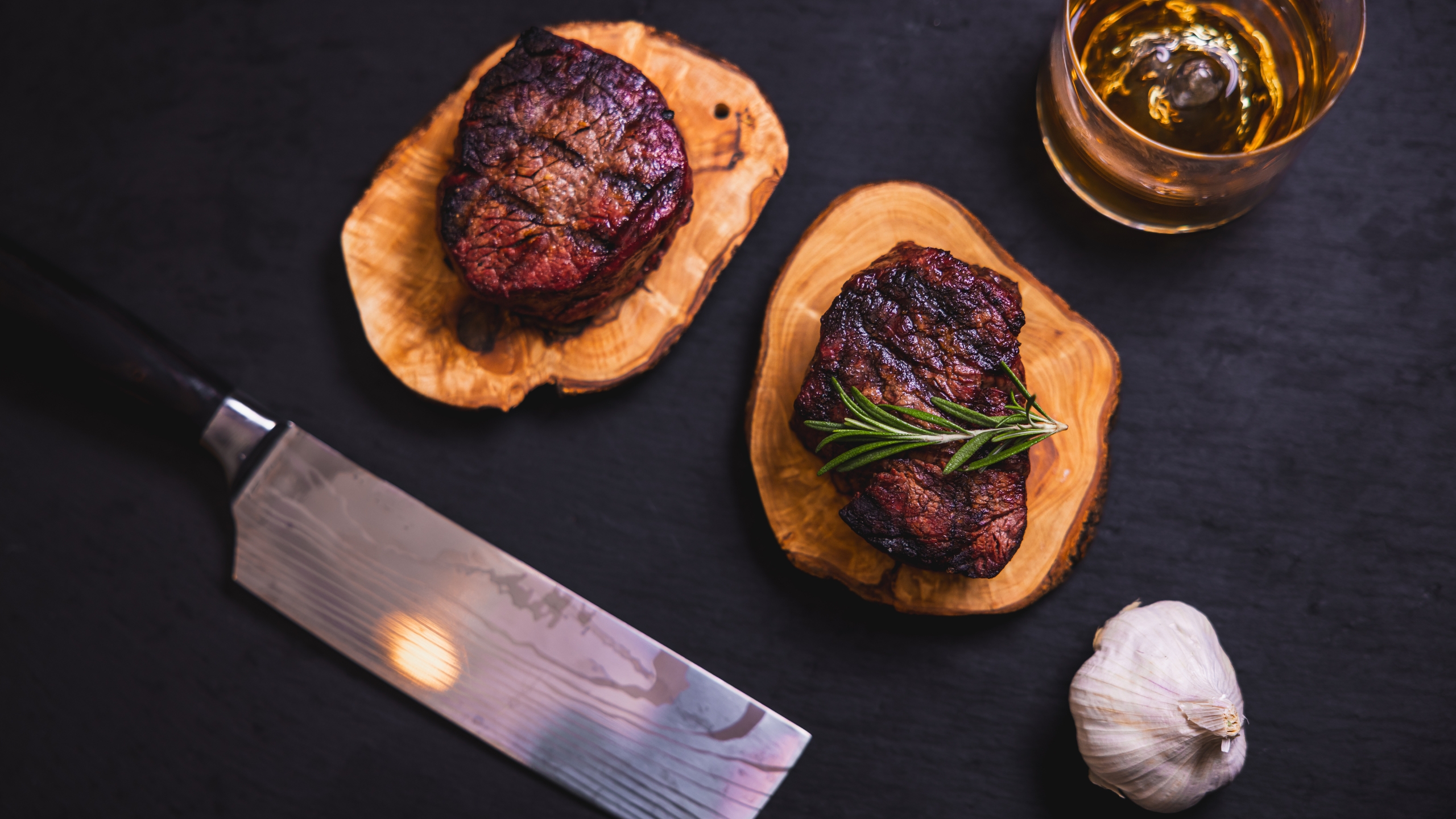
Wagyu vs. Angus: Which Beef Belongs on Your Table?
"Tell me what you eat, and I will tell you what you are."— Jean Anthelme Brillat-Savarin
It's the question every serious beef buyer eventually asks: Wagyu or Angus? Which one is actually better?
You'll find plenty of answers online, and most of them are quietly rigged — written by someone who sells one and needs you to believe it wins. We're going to do something different. We'll give you the honest comparison, treat both with the respect they've earned, and then tell you the thing most of those articles leave out: there's a third answer that makes the whole debate a little less either-or.
The Quick Answer
Angus is exceptional everyday beef — bold, beefy, versatile, and a tremendous value. Wagyu is a richer, more marbled indulgence, prized for its buttery, melt-in-your-mouth texture. Neither is universally "better." Angus wins on versatility and value; Wagyu wins on richness and tenderness. And American Wagyu — a cross of the two — is built to give you much of both at once.
If that's all you came for, you're set. If you want to actually understand the difference, here's the full picture.
Where They Come From
Angus originated in Scotland in the 1800s and went on to become the most popular beef breed in the United States. It's hardy, consistent, and widely raised — the backbone of American steak culture. When people picture a great classic steak, they're usually picturing Angus.
Wagyu comes from Japan, where a handful of cattle breeds were developed over generations and bred, with extraordinary care, for one trait above all: intramuscular fat, or marbling. That single-minded focus is what gives Wagyu its reputation. (For the full breakdown of Japanese versus American Wagyu and what the grades actually mean, see our guide to what American Wagyu really is.)
Marbling: The Core Difference
This is where the two breeds genuinely diverge.
Wagyu produces more marbling, and finer marbling — delicate threads of fat distributed densely through the muscle. That fat is also higher in monounsaturated fats and melts at a lower temperature, which is why Wagyu seems to soften the instant it meets heat and again the instant it meets your palate.
Angus marbles well too — top-grade Angus, like USDA Prime or Certified Angus Beef, can be beautifully marbled — but its marbling is more moderate and more balanced. The result is a firmer, meatier bite rather than a melting one. Less butter, more beef.
Neither approach is wrong. They're aiming at two different experiences.
Flavor and Texture
Angus delivers the classic steakhouse experience: a bold, robust, beef-forward flavor and a satisfying chew. It tastes the way most people think a great steak should taste. There's a reason it's the standard against which other beef gets measured.
Wagyu is a different register entirely — softer, richer, almost luxurious. As the fat renders, the flavor turns buttery and complex, with subtle notes some describe as nutty or even faintly sweet. It trades the bold beefy punch of Angus for balance and richness. Where Angus is a great steak, Wagyu is an experience.
Which you prefer is genuinely a matter of taste. Some people love the indulgence of Wagyu; others find it too rich and prefer the honest, beefy backbone of a great Angus. Both are right.
Cooking
Angus is forgiving. Its moderate fat content makes it versatile and hard to ruin — it grills, roasts, and pan-sears beautifully, and it gives consistent results even if your technique isn't perfect. It's the beef you can hand to anyone.
Wagyu asks for more restraint. That abundant fat is the whole point, and overcooking renders it right out of the steak — so Wagyu rewards lower heat, careful temperature control, and a light hand on seasoning. The richest Japanese grades are best in small portions, cooked simply. American Wagyu is more steak-like and more flexible, but it still wants respect. (We walk through exactly how in our guide to cooking Wagyu steak without ruining it.)
Price
The price gap is real, and it follows directly from everything above.
Angus is generally the more accessible choice — often somewhere in the range of $12–30 per pound depending on grade — which is part of what makes it such a practical everyday beef. American Wagyu typically runs higher, often in the range of $25–60 per pound, reflecting the genetics, the longer feeding, and the added care. Authentic Japanese A5 sits in a category of its own, frequently $150 per pound and well beyond.
None of those prices is a rip-off or a bargain on its own — each reflects what the beef actually is. The question isn't which is cheapest. It's which is worth it for what you're trying to do.
So Which Should You Choose?
Match the beef to the moment:
Choose Angus when you want dependable, bold, classic beef for regular meals — beef that's versatile, forgiving to cook, and an outstanding value. For everyday excellence, it's hard to beat.
Choose Wagyu when you want indulgence — a special occasion, a meal you want people to remember, or simply the most tender, buttery bite money can buy.
For a lot of people, the honest answer is "both, depending on the night." Which is exactly where the third option comes in.
The Best of Both: American Wagyu
Here's the part the usual Wagyu-versus-Angus article skips.
American Wagyu isn't a compromise between the two breeds — it's a deliberate cross of them, most often Japanese Wagyu genetics bred with American Angus. And that cross is engineered to capture the best of each: the prized marbling and melt-in-your-mouth tenderness of Wagyu, anchored by the robust, beef-forward flavor and structure of Angus.
In other words, it answers the question by refusing the premise. You get Wagyu's richness without losing the satisfying, genuinely beefy character that makes Angus so beloved — and a cut that's more versatile and more steak-like than the richest Japanese grades. For the person who wants both the indulgence and the honest backbone, American Wagyu is the point where the whole debate resolves.
It's what we raise at Dizzy Creek, on our private Nebraska ranch, for exactly that reason. If you'd like to taste where the two traditions meet, our beef shares and curated bundles are the place to start.
The Gentry Take
There's a kind of confidence that doesn't need the flashiest thing in the room — it needs the right thing. Knowing the difference between Wagyu and Angus, understanding why each costs what it does, and choosing based on what actually suits the occasion rather than what sounds most impressive: that's discernment. And discernment is quietly one of the most underrated marks of a person worth taking seriously.
Anyone can buy the most expensive cut and call it taste. It takes a little more to understand what you're buying and why — to choose on merit, not on status. Do that consistently, at the table and everywhere else, and people notice. Not because you announced it, but because it shows.
